Seven medieval mountain strongholds in northern Iran have been added to the UNESCO World Heritage List, becoming Iran’s 30th registered World Heritage property.
On July 26, 2026, UNESCO officially inscribed Alamut Castle and Related Fortifications during the 48th session of the World Heritage Committee in Busan, South Korea.
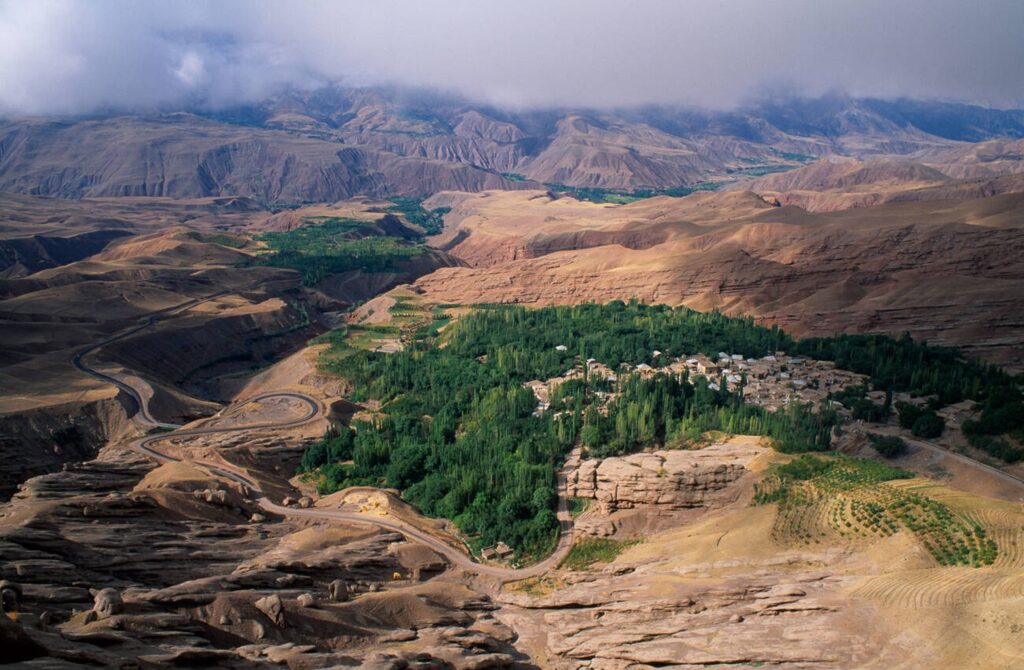
The newly listed site stretches across the dramatic mountain landscape of Qazvin Province, where steep cliffs, deep valleys and narrow passes once formed part of a sophisticated defensive network.
The serial property includes seven sites:
Alamut Castle, Lambsar Castle, Ilan Fortification, Shirkuh Fortification, Navizar Shah Castle, Qostinlar Fortification and Shams Kalayeh Fortification.
Together, these strongholds formed the political and military heartland of the Nizari Ismaili state between the late 11th and mid-13th centuries.
Contents
A Network Built Into the Mountains
The Alamut fortresses were not simply isolated castles. They worked as a connected system.
Their elevated positions allowed defenders to monitor roads, communicate across valleys and control access to settlements and water sources. The natural landscape became part of the architecture, with cliffs and ravines providing protection where walls were unnecessary.
The sites also contain remains of reservoirs, water channels, storage rooms, agricultural terraces and rock-cut structures. These systems helped mountain communities remain self-sufficient during long periods of isolation or siege.
Alamut Castle, the Eagle’s Nest
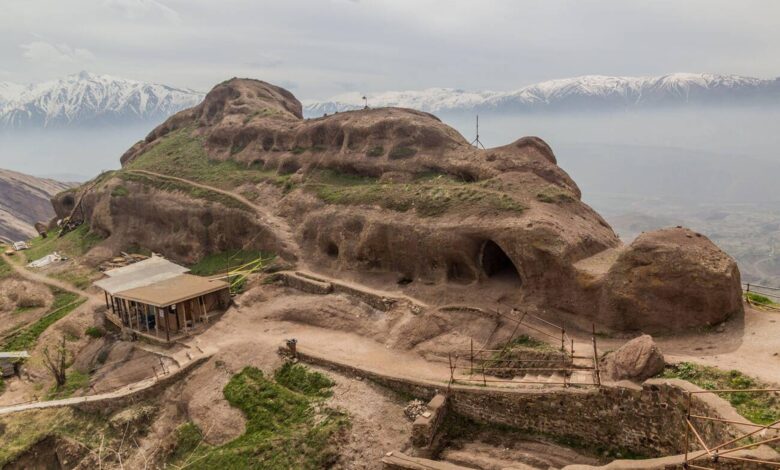
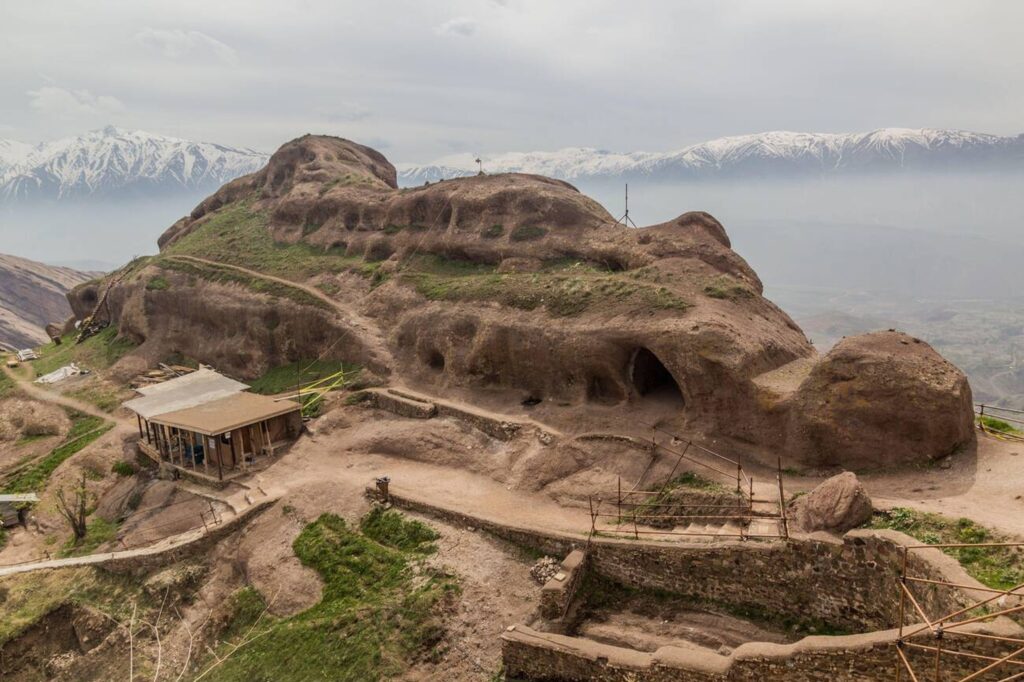
The best-known site is Alamut Castle, perched on a narrow rocky ridge near the village of Gazor Khan, around 105km northeast of Qazvin.
Its name is often translated as “Eagle’s Nest”, an appropriate description for a fortress that appears to rise directly from the mountain.
In 1090, Hasan Sabbah took control of Alamut and established it as the centre of the Nizari Ismaili state. The castle later became known not only for its military strength, but also as a centre of administration, religious thought and scholarship.
Today, visitors can still see sections of defensive walls, water systems, carved spaces and foundations spread across the ridge.
Lambsar and the Valley’s Other Strongholds
Lambsar Castle, near Razmian, was one of the largest and strongest Ismaili fortresses. Built across a wide plateau and protected by deep valleys, it played a major role in defending the western approaches to Alamut.
The other sites guarded routes, settlements and strategic points throughout the region.
Shirkuh, Ilan, Qostinlar and Navizar Shah formed part of the wider surveillance and defence system, while Shams Kalayeh occupied an important position in the central Alamut landscape.
Some historians have linked Shams Kalayeh with Maymun-Diz, the fortress associated with the final Nizari ruler, Rukn al-Din Khurshah, and the Mongol campaign led by Hulagu Khan in 1256. The exact location of Maymun-Diz, however, remains debated.
What UNESCO Status Means for Alamut
The inscription gives international recognition to one of Iran’s most striking cultural landscapes.
It is expected to support stronger conservation, archaeological research and sustainable tourism across the Alamut Valley. It may also encourage visitors to explore the region as a connected historical landscape rather than focusing only on Alamut Castle.
For travellers, the appeal is easy to understand.
The journey combines mountain scenery, remote villages, challenging walking routes and the remains of a medieval state that used geography with extraordinary skill.
More than seven centuries after the fall of the Nizari strongholds, Alamut has returned to the global map.