'/%3e%3c/svg%3e)
'/%3e%3c/svg%3e)

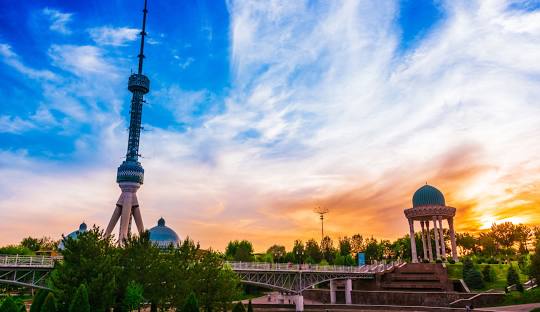
Tashkent is the capital city of Uzbekistan and also the largest city in Central Asia. It’s known for its many museums and its mix of modern and Soviet-era architecture. The Amir Timur Museum houses manuscripts, weapons and other relics from the Timurid dynasty. Nearby, the huge State Museum of History of Uzbekistan has centuries-old Buddhist artifacts. The city’s skyline is distinguished by Tashkent Tower, which offers city views from its observation deck.
For many years, Tashkent has been the most important business and cultural center of the country, attracting tourists and businessmen from various countries of the world.
Popular landmarks
Tashkent has a large list of attractions. It will take several days to visit all of them.
- Wide avenues, green alleys, fountains and eco-parks for leisurely walks;
- Unique artifacts about the history and culture of the peoples of Central Asia in the numerous museums of the city;
- Majestic architectural ensembles, mosques and minarets;
- Theaters and galleries for every taste.
Gifts and souvenirs
Walking along the streets of Tashkent, you can find many memorable things, ranging from small trinkets to huge memorable souvenirs. Most of the souvenir workshops are located in old madrassas and at Chorsu Bazaar. There you can find absolutely everything: crafts carved from wood, pottery, national clothes, and even knives and daggers forged in local forges.
Сuisine
Tashkent restaurants with their variety and the level of service can surprise any gourmet. In the city, you can find not only national cuisine, which in Tashkent differs in taste from the identical dishes in the other parts of the country, but also the best representatives of the foreign gastronomic industry. In Tashkent, you can try Uyghur, Korean, Chinese, Japanese, European and even molecular cuisine.
The best places to visit in Tashkent
-
Tashkent Metro
Tashkent was the only city in Central Asia with an underground railway. What makes it special is its incredibly artistic and luxurious design. Each station features grand architecture, with walls and floors made of marble and granite. Ceramic sculptures, stone statues, and chandelier-like lighting fixtures create an atmosphere so magnificent that it hardly feels like a metro station.
-
Independence Square
Located in the center of Tashkent, Independence Square serves as a major landmark surrounded by government and parliamentary buildings. It is also a popular gathering place for locals looking to relax and enjoy the open space.
-
Chorsu Bazaar
Chorsu Bazaar is a lively market known for its iconic dome-shaped roof. It serves as the main marketplace for locals, offering a vast selection of fresh vegetables, fruits, processed foods, meats, sausages, bread, sweets, and household goods.
This massive two-story bazaar extends outdoors, creating an energetic and bustling atmosphere filled with the essence of Central Asia. As you wander through the market, enthusiastic vendors will call out to you, making it hard to resist stopping by their stalls. Engaging in bargaining or negotiating bulk purchases can be a fun way to interact with the locals.
Next to Chorsu Bazaar, you will find restaurants serving local cuisine as well as shops selling traditional handicrafts, making it a great place to take a break or pick up souvenirs.
-
Amir Timur Museum
The Amir Timur Museum stands out with its striking blue dome and bright white walls. Opened in 2006, it is a relatively new museum, also known as the Timurid History Museum. Inside, you will find an extensive collection of exhibits related to the Timurid dynasty, which thrived from the 14th to the 16th century. The museum houses more than 3,000 artifacts, including historical documents, paintings depicting scenes from the past, ancient weapons, and coins. It provides a deep insight into Uzbekistan's rich history and the legacy of the Timurid Empire.
-
Amir Timur square
Tashkents central square is one of the main places to visit in Tashkent. It was built in 1870 to become Tashkent’s central park.
Now the main monument in the park is Amir Timur on his horse, but several men have stood here before him. First it was Lenin, then Stalin, and finally Karl Marx untill Uzbekistan’s independence when Timur was reinstalled as hero of the past.
Most of the buildings you see have historical importance such as the Hotel Uzbekistan, The Law university, the Forum’s palace, the clock towers and the Amir Timur museum.
-
Khast Imom complex
The Khast Imom complex is one of the best places to visit in Tashkent for Islamic architecture. It has been the religious center for Tashkent for centuries after the first imam of Tashkent was buried here.
'/%3e%3c/svg%3e)

'/%3e%3c/svg%3e)

